
Wood Burners in the UK
There’s a certain image people have in their head of a proper British home. A log burner going, a neat stack of wood to one side, maybe a dog asleep in front of it. It feels like Rupert Lowe‘s front room.
It also feels traditional, and it is, just not in the way most people think.
Go back a few decades and open fires were not a lifestyle choice like now; they were how people heated their homes. Terraced houses, older semis, council housing, most of them had a working fireplace, and it got used because it had to.
That has changed completely.
Central heating replaced it, chimneys were blocked off, and modern houses were built without them altogether. What used to be standard has slowly been pushed out.
Now it has flipped the other way. Open fires nowadays are quite often a middle-class thing.
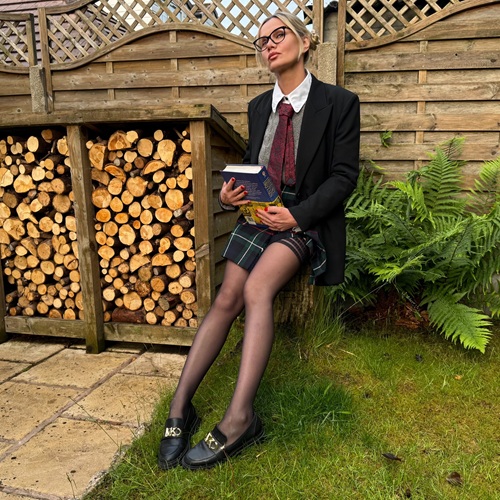
Photo credit: Cheshire Olga
Wood burners and open fires tend to sit in rural properties, period homes, and renovated houses where someone has chosen to put one back in nowadays. In other words, they have gone from an everyday necessity for the poor to a must-have for the more affluent.
They used to be how people heated their homes. Now, they are something people add back in once they can afford to.
And that is where the confusion starts.
If you live in the countryside or a semi-rural area, they are still very much part of everyday life. Go into a few houses and you will see one, and they will be used through the winter without much thought.
Try the same thing in a city like Birmingham or London and it is a completely different story. Most people either cannot have a fire, do not have a chimney, or would not bother even if they could.
For a lot of people, a real fire is something they have not seen since they were kids.
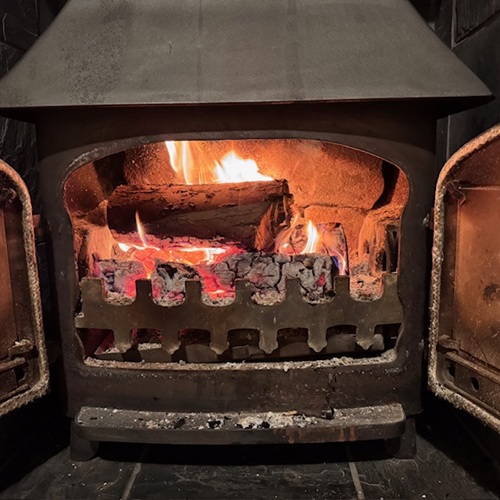
They are not rare if you live in the right place. They are almost invisible if you do not. The one below is a 1970s Thorpeman Villager log burner still in regular use (mine actually).
The Problem With the Statistics
You will often see figures saying things like “8% of households burn wood” or “10% of homes have a stove installed”.
Both might be technically true, but they do not mean what people think they mean.
For a start, “burning wood” in a lot of surveys includes anything from a proper log burner to a garden fire pit, or even a barbecue. So straight away, that inflates the numbers.
Then you have the lifestyle overlap. The same households that “burn wood” might not be sat inside with a log burner at all.
It could just as easily be someone out in the garden on a Sunday, with some chicken shashlik on barbecue skewers. Charcoal is still wood, isn’t it?
That still ends up in the data as “burning wood”, even though it has nothing to do with heating the house.
Then there is the difference between having a stove and actually using it.
- Blocked fireplaces
- Decorative stoves
- Installations that rarely get lit
And even when surveys say someone has burned wood in the last year, that could mean they lit it once at Christmas, and that is it.
So the headline numbers make it look more common than it really is.
Where Wood Burners in the UK Are Actually Common
Once you filter out the noise, a clear pattern appears.
Wood burners and open fires are mainly used in older houses such as Victorian and Edwardian homes, cottages, rural properties, semi-rural areas, and places where smoke control rules are less restrictive.
In those areas, they are still a normal part of how people heat their homes, or at least supplement it.
In cities, they are much rarer.
Even where someone has installed a stove, a lot of people do not want the hassle, are not sure about the rules, or just default to central heating.
That is why when someone walks into a house with a proper working fire, the reaction is often the same: “I have not seen one of these in years.”
It’s Almost Never the Main Heating
This is one of the most important points.
Well over 90% of people who burn wood already have another way of heating their home.
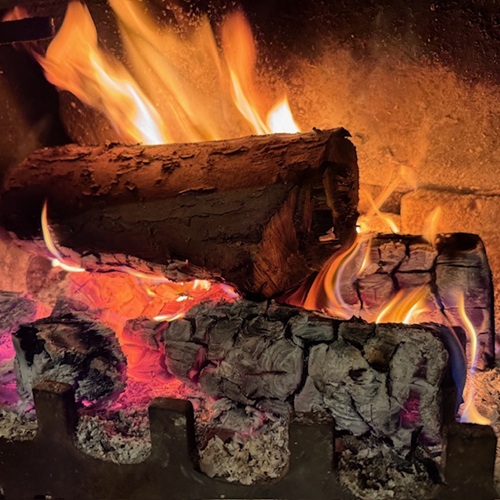
So for most households, a fire is a secondary heat source, or something used for atmosphere. Not a necessity.
That matters because it explains how often they actually get used.
If you have got gas or electric heating that works instantly, you are not lighting a fire every day. You are doing it when you feel like it, when it is particularly cold, or when you want the room to feel different.
The Practical Reality
There is also a reason they have not made a comeback in cities.
Using a real fire is not as simple as turning a thermostat.
You need somewhere to store logs. You have to deal with ash and cleaning. You need a properly maintained chimney or flue. You need to buy or source fuel.
Then there are stifling government regulations. Large parts of the UK are covered by smoke control areas, which restrict what you can burn and how you can use a fire.
Add all that up, and most people just stick with central heating.
What People Are Actually Burning Now
Another shift that often gets overlooked is the fuel itself.
Real coal did not just fade away; it was pushed out by government diktat. The government brought in air quality laws that gradually banned the sale of traditional house coal, with a full ban on retail sales for domestic use coming into force in England in May 2023.
You can still buy smokeless fuels and briquettes (which are mostly no good), and fuels such as anthracite remain legal, but traditional house coal, as people knew it, has effectively gone. It’s even a black market product now. People search high and low for a bag of smokey coal. (In fact, if you are in the North West, and can get some, leave a comment below and someone will be in touch).
That has changed what a real fire actually means in practice.
These days, if someone has a fire, they are almost always burning logs.
The Type of Wood Makes a Bigger Difference Than People Realise
One thing that does not get talked about enough is how much the type of wood affects the whole experience.
A lot of people try a fire once, get loads of smoke, poor heat, or a messy burn, and never bother again. In most cases, it is not the stove, it is the fuel.
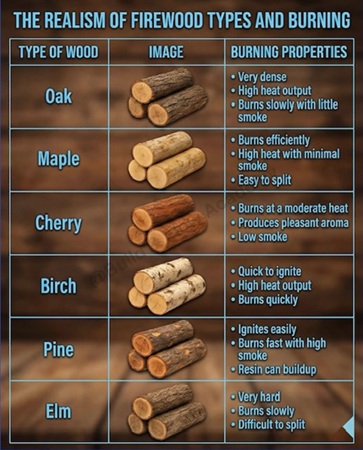
If you are using the right wood (which means not chopped up pallets), a fire is clean, hot and steady. If you are using the wrong stuff, it is the opposite.
- Oak is dense and slow-burning. It gives off a lot of heat and lasts.
- Birch lights easily and burns hot, but does not last as long.
- Cherry sits somewhere in the middle and gives off a decent heat with a pleasant smell.
- Pine burns quickly and produces more smoke, and can leave residue behind if used too often.
- Elm burns slowly but can be awkward to split and prepare.
Moisture content matters just as much. Wet or unseasoned wood will smoke, struggle to stay lit, and coat everything in soot.
This is part of the reason wood burners get a bad reputation in some areas. When they are used properly, they are clean and effective. When they are not, they are a hassle.
So, How Common Are They Really?
If you strip everything back, a few million households in the UK at best will burn wood at least occasionally. That works out to mid single digits as a percentage, but regular, consistent use is clearly lower than that.
More importantly, in rural areas, they are common. In cities, they are not.
That is the real answer.
Wood Burners in the UK: The Bottom Line
Wood burners and open fires have not disappeared, but they are no longer a standard feature of British homes.
They have become more location and income-dependent than anything else.
If you live in the right place, they are completely normal. If you do not, they are almost a novelty. Nostalgia even.
And that is why the statistics never quite match people’s real-world experience.