
Searching for a Restore Britain baseball cap has become more complicated than it should be.
Restore Britain now has an official merchandise shop, but its baseball caps cost an extraordinary £46.99. At the other end of the market, Amazon, eBay, Etsy and assorted merchandise websites are filling up with printed caps, cheap Chinese knock-offs, computer-generated product images and badly embroidered versions rushed out to cash in on growing support for Rupert Lowe and Restore Britain.
For Restore Britain supporters, the cap is not simply a fashion accessory. It is a political statement. It should not look like disposable promotional tat, and it should not cost nearly fifty pounds simply because it appears in an official shop.
So where should you buy a Restore Britain baseball cap, and what should you avoid?
The Official Restore Britain Baseball Cap Costs £46.99
Restore Britain now sells baseball caps through its official merchandise website for £46.99.
Yes, that really is nearly fifty of your hard-earned quids for a baseball cap.
The official store contains page after page of similarly named products, including the Restore Britain Baseball Cap, Restore Britain Cap, Restore Britain UK Cap, Restore Britain UK Hat, Restore Britain Embroidered Baseball Cap and several other slight variations.
Most of these caps are priced at exactly the same £46.99.
The product descriptions contain plenty of generic sales language about streetwear, British-inspired fashion, everyday comfort and breathable construction. What they do not contain is much meaningful information about the cap itself.
There is little or no detail about the manufacturer, the weight or type of cotton, the specific cap blank being used, where it is made, how the embroidery has been tested or who checks the finished product before it reaches the customer.
For £46.99, buyers are entitled to expect something exceptional. The listing does very little to explain what makes the cap worth that price.
Restore Britain Is Using a Print-on-Demand Model
The official Restore Britain shop is not a conventional merchandise operation where the party buys a batch of caps, inspects them, holds them in stock and sends them to supporters.
It uses a print-on-demand fulfilment model.
The shop itself explains that different products are manufactured in different factories and may arrive in separate packages at different times. Its legal pages also refer to the print-on-demand business ShirtGoat.
In practical terms, Restore Britain does not hold the caps, pack the orders or inspect the individual product sent to each buyer. The order is passed to a third-party fulfilment operation, which manufactures or sources the item and sends it directly to the customer.
Restore Britain never sees the cap you receive. And anyone can knock up AI images.
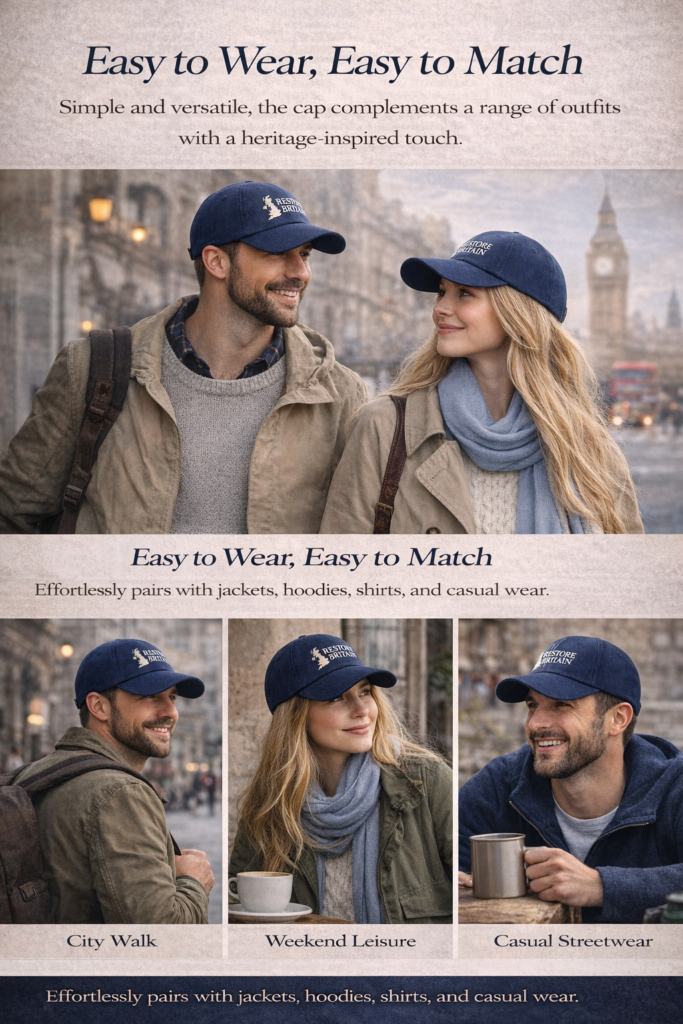
That arrangement is convenient for the party. There is no stock to buy, no warehouse to operate, no staff needed to pack orders and no risk of being left with boxes of unsold merchandise.
It is rather less reassuring for the supporter being asked to pay £46.99.
Print-on-demand is not automatically bad. It can be a useful way for a small organisation to offer merchandise without investing thousands of pounds in stock. But it also means that the organisation whose name appears on the product is removed from the physical product itself.
The party is relying entirely on the print-on-demand supplier to select the cap, reproduce the design, maintain the quality and dispatch the correct item.
There is something particularly absurd about a movement called Restore Britain selling a £46.99 cap, probably Chinese made, through a hands-off fulfilment chain in which Restore Britain itself never even handles the product.
Official Does Not Automatically Mean Better
Many buyers assume official merchandise must be the best available. Sometimes it is. An official product may use a unique design, better materials or unusually high manufacturing standards.
But the word “official” does not magically improve a baseball cap.
In this case, it means Restore Britain has authorised the shop and presumably receives some financial benefit from sales. It does not mean the party holds the stock, inspects the embroidery or personally sends the cap to supporters.
A £46.99 price tag does not guarantee a £46.99 product.
If supporters want to give money to Restore Britain, they can donate directly. They should not have to disguise the donation as the purchase of an unusually expensive baseball cap.
Avoid Printed Restore Britain Caps
At the cheaper end of the market are numerous printed Restore Britain caps.
A printed cap is not the same as an embroidered cap, regardless of how carefully the seller has photographed it.
The cheapest versions commonly use a heat-applied transfer, screen print or vinyl decal. The logo sits flat on top of the cap rather than being stitched into the fabric.
That can look acceptable in a listing photograph, particularly when the seller is using a digital mock-up rather than a photograph of the finished product. In real life, the difference is usually obvious.
Printed and vinyl logos can:
- Look flat and cheap
- Crack as the front of the cap flexes
- Peel or lift around the edges
- Fade after exposure to sunlight
- Deteriorate when washed or repeatedly exposed to rain
The Restore Britain design is particularly suited to embroidery. The white lettering and outline of the British Isles should stand proud of the navy fabric in raised thread.
Proper embroidery gives the design weight, definition and texture. It looks like part of the cap rather than a sticker applied as an afterthought.
A Restore Britain cap is intended to make a political statement. A cracked plastic logo peeling away from the front makes the wrong one.
Bad Embroidery Can Be Just as Awful
The word “embroidered” on a product listing does not guarantee quality.
Cheap embroidery can be dreadful.
An image cannot simply be fed into an embroidery machine and expected to emerge perfectly. The design must first be digitised, which means converting the lettering and image into a pattern of stitches that the machine can reproduce.
The Restore Britain logo includes fairly small lettering and a detailed outline of the British Isles. Poor digitisation can turn that outline into a shapeless white blob.
Common problems include:
- Letters running into one another
- Uneven or crooked lettering
- Loose threads across the design
- Gaps where the navy material shows through
- Stitching that pulls or puckers the fabric
- An unrecognisable outline of Britain
- A logo positioned too high, too low or off-centre
Cheap marketplace sellers are unlikely to spend time developing the embroidery. Many simply upload the logo to an automated supplier and list the resulting product without ever ordering or inspecting one themselves.
The first time the cap is physically produced may be after a customer has already paid for it.
By contrast, Grantleigh says it rejected seven versions of its Restore Britain cap before the embroidery was considered good enough to sell. That is what proper product development looks like: produce a sample, inspect it, identify the faults and repeat the process until the result is right.
A detailed guide to Restore Britain caps and merchandise looks more closely at the differences between printed logos, raised embroidery and the various caps now being offered online.
Restore Britain Baseball Cap: Beware of Cheap Chinese Knock-Offs
Political merchandise attracts opportunists.
As soon as a political party, public figure or slogan begins attracting attention, marketplace sellers start uploading products. Most have no interest in the movement and no connection with the people supporting it. They simply follow search trends and manufacture whatever appears likely to sell.
Many of the cheapest Restore Britain caps are generic blanks produced in China, decorated as cheaply as possible and sold through marketplace accounts or print-on-demand websites.
The business showing you the advertisement may not manufacture the cap. The seller may never have seen it. The product photograph may be a computer-generated mock-up, while the order is passed through several companies before eventually reaching an overseas factory.
This is how buyers end up receiving:
- Thin, shiny polyester instead of decent cotton
- A flat printed logo advertised using the word “embroidered”
- A cap that collapses at the front
- Crooked or badly aligned stitching
- Loose threads hanging from the logo
- A distorted or unrecognisable map of Britain
- A cheap plastic adjustment strap
- A different colour or shape from the advertised photograph
- A product that takes several weeks to arrive
Not every product made in China is poor quality. China can manufacture excellent products when the buyer specifies the correct materials, pays for proper production and carries out quality control.
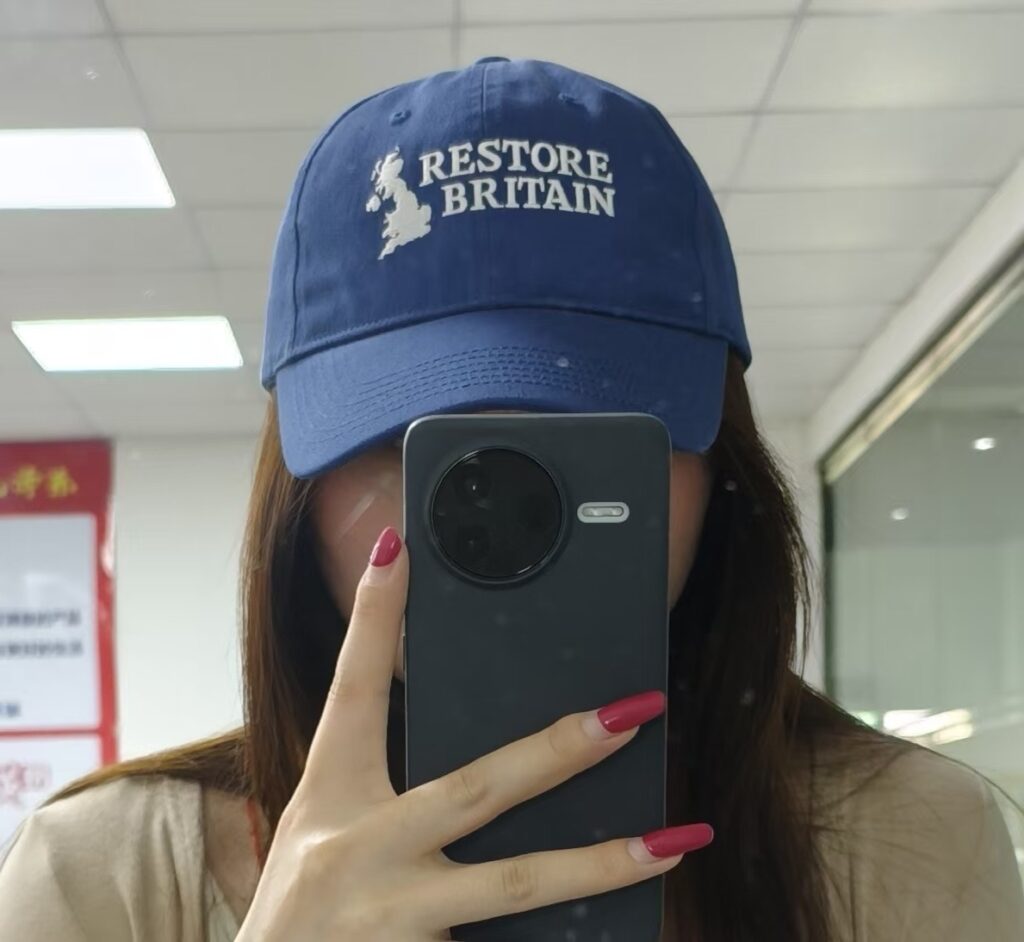
The problem is the knock-off seller ordering the cheapest possible version, carrying out no inspection and hiding behind a marketplace account when something goes wrong.
That is very different from commissioning a product, checking physical samples and holding the finished stock in Britain.
Do Not Trust Computer-Generated Product Images
One of the easiest ways to spot a questionable Restore Britain baseball cap listing is to look closely at the photographs.
Does the seller show the real cap from several angles, or does every image use the same perfectly flat logo pasted onto a generic stock photograph?
Digital mock-ups are useful during product development, but they tell the customer almost nothing about the finished item. They cannot show:
- The actual embroidery quality
- The thickness of the material
- Whether the front holds its shape
- Whether the stitching is centred
- The quality of the rear fastening
- Whether the finished colours match the design
Look for close-up photographs of the real logo. You should be able to see the individual stitches, the raised surface of the lettering and the actual texture of the cap.
If every photograph looks suspiciously perfect, it may be because the photographed cap does not exist.
How to Choose a Restore Britain Baseball Cap
Before ordering, check the following points.
Is the logo genuinely embroidered?
The description should state clearly that the design is stitched directly into the cap. Be cautious when a listing jumps between terms such as printed, graphic, stitched, transfer and embroidered.
Are the photographs of the real product?
Look for close-up images showing the actual thread and cap material. A digital logo placed onto a stock photograph proves nothing.
Is the cap structured?
A structured cap contains support in the front panels, helping it retain its shape. Cheap unstructured caps can quickly become soft, floppy and misshapen.
What material is it made from?
A decent cotton cap generally looks and feels better than thin, shiny polyester promotional headwear.
What type of rear fastening does it use?
An adjustable fabric strap with a metal buckle looks more substantial than a brittle plastic clip or basic snap fastening.
Where is the stock held?
Do not assume that “UK seller” means “UK stock”. Check the delivery estimate, item location and returns information. A seller can run a UK-facing website while sending every order directly from China.
Has anybody inspected the finished product?
A seller holding physical stock should know exactly what is being sent. A print-on-demand seller may never have handled the product at all.
The Grantleigh Restore Britain Baseball Cap
Grantleigh sells a navy blue embroidered Restore Britain baseball cap for £17.50.
The cap uses a structured six-panel cotton design, meaning the front retains its shape rather than collapsing after a few weeks. The Restore Britain lettering and outline of the British Isles are stitched directly into the cap using raised white embroidery.
It is not printed, heat transferred or applied using a vinyl decal.
The cap also has an adjustable rear fabric strap with a metal buckle rather than a cheap plastic fastening.
Most importantly, it is a real stocked product. Grantleigh holds the caps in the UK and dispatches orders using Royal Mail Tracked 48. The company knows what the finished cap looks like because it developed the embroidery, rejected unsatisfactory samples and bought the completed stock.
Grantleigh is not Restore Britain’s official merchandise supplier and does not claim to be. The cap is independently produced and sold by Restore Britain supporters and party members who were dissatisfied with the quality and value of what was otherwise available.
At £17.50, it costs £29.49 less than the £46.99 cap sold through Restore Britain’s official print-on-demand shop.
That saving is enough to buy another cap, make a separate donation to Restore Britain or simply keep almost thirty pounds in your pocket.
Where to Buy a Restore Britain Baseball Cap in the UK
Anyone looking for an official cap can buy one through Restore Britain’s own merchandise shop for £46.99. Just bear in mind that it is supplied through a third-party print-on-demand operation and is not held or inspected by Restore Britain itself.
Anyone tempted by a very cheap marketplace cap should check whether the logo is printed, whether the photographs show the actual product and whether the order will be sent from China.
For buyers who want a properly embroidered Restore Britain baseball cap at a sensible price, shipped from the UK, the Grantleigh version is the obvious alternative.
For £17.50, it offers:
- A navy blue cotton cap
- A structured six-panel design
- Raised white embroidery
- A clearly defined Restore Britain logo
- An adjustable rear strap
- A metal buckle fastening
- Stock held in the UK
- Royal Mail Tracked 48 delivery
- A product that was sampled and inspected before being offered for sale
No printed vinyl logo. No anonymous Chinese dropshipping operation. No print-on-demand lottery. No £46.99 price tag.
Click here to shop the Grantleigh Restore Britain embroidered baseball cap.