
Nostalgia in the home is not a modern trend. It just feels like one.
People talk about “bringing back character” or “restoring tradition” as if it is something new, but it is not. We have been doing this for well over 200 years.
One of the earliest examples is Wedgwood. Back in the late 18th century, they were already selling reproductions of classical pieces like the Portland Vase, marketed as if ancient techniques had been rediscovered.
They had not.
It was a modern product, made using modern methods, dressed up as something old. And people loved it.
That pattern never really stopped.
This Has Always Been Happening
Throughout the 19th century, designers kept looking backwards.
Even movements that were supposed to be progressive, like Arts and Crafts, were really about an idealised version of the past. Handmade, rural, simple, honest. Whether that past ever really existed in that form is another question.
By the early 20th century, modern design started to appear properly. Clean lines, new materials, completely different thinking.
But in Britain, it never really took over.
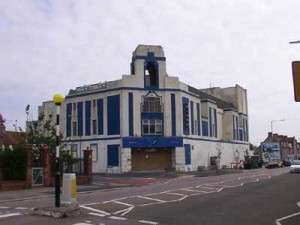
Most houses being built between the wars were not bold modernist statements. They were cautious, familiar, and slightly confused.
You got bits of everything:
- Mock timber framing
- Bay windows
- Stained glass
- Odd modern touches thrown in
- Still with open fires
Not a clear style, just a mixture that felt safe.
When Modern Was Supposed to Fix Everything
After the Second World War, everything changed.
Or at least, it was supposed to.
Modern design was no longer niche. It was rolled out at scale. New housing, new towns, new materials, new ways of living. This was meant to be a clean break from the past.
And for a while, people bought into it.
You had:
- Tower blocks
- Wide roads built for cars
- Plastics everywhere
- New materials like Formica and vinyl
- Stripped-out interiors with fireplaces removed and “old-fashioned” details covered over
It was all about progress.
The future was going to be better.
Then It Started to Go Wrong
It did not take long for cracks to show.
Events like the Windscale fire and the Ronan Point collapse shook confidence in this new world.
At the same time, everyday experiences were not helping.
Modern materials turned out to be unpleasant to live with:
- Vinyl that stuck to your skin
- Nylon that built up static
- Plastics that aged badly
Cities were redesigned around cars, often at the expense of people. Places like Birmingham became examples of what not to do.
By the 1970s, the shine had worn off.
Modern did not feel exciting anymore. It felt cold, uncomfortable, and in some cases, badly thought out.
So People Did What They Always Do
They went backwards.
Interest in Victoriana and Art Deco started to pick up. At first, it was collectors, picking things up cheaply while nobody else cared.
Then it went mainstream.
Brands like Laura Ashley built entire businesses on selling an idealised version of the past.
And then there was Biba, who took it further than anyone.
By the early 1970s, Biba had turned nostalgia into a full environment. Not just clothes, but homeware, packaging, and even food. Everything was styled to look like it belonged to another era.
It worked, until it did not.
The moment it lost its edge and became sanitised, it fell apart.
The 1980s: When “Traditional” Came Back Properly
Despite what people say about the 1980s being all about modern design, this was really the point where things swung back the other way.
Not towards accuracy, but towards an idea of tradition.
You saw it everywhere:
- Leaded windows
- “Period-style” doors
- Fake beams
- Fake stone cladding
Particularly on council houses that had been bought under Right to Buy.
People were trying to distance themselves from where they had come from, and “traditional” design became a way of doing it.
It did not matter if it made sense.
You had 20th-century terraces dressed up to look vaguely 19th-century. Estates built in the middle of cleared woodland, named after trees that had just been cut down, filled with houses pretending to be older than they were.
It was not about history. It was about the image.
The Fake vs Real Problem
This is where it gets interesting.
People say they like “traditional”.
But what they usually mean is a very specific, cleaned-up version of it.
Most “period-style” homes and products are modern underneath and styled on the surface.
Take something like a “traditional” kettle or toaster.
It looks old, maybe with muted colours and floral patterns, but inside it is completely standard modern equipment.
Same with electric fires.
The idea goes back decades. Flickering light pretending to be a real flame. Everyone knows it is not real, but it creates the impression.
And that is enough.
People Do Not Actually Want the Past
Here is the contradiction.
A lot of people who like “traditional style” would not actually want to live with the real thing.
Real old houses can be cold, awkward, and expensive to maintain.
Real antiques can look worn, feel dated, and come with compromises.
So instead, people go for something in between.
Modern comfort, wrapped in a version of the past that never really existed.
Why This Keeps Happening
It comes down to something simple.
The modern world moves quickly.
Too quickly, for a lot of people.
Technology changes, styles change, expectations change. What feels new today feels dated tomorrow.
That creates a kind of low-level unease.
The past, on the other hand, feels fixed.
It feels:
- Familiar
- Stable
- Already judged
Even if it is not accurate, it feels safe.
And when people are spending serious money on a home, they tend to choose what feels safe.
Modern design risks dating quickly.
“Traditional” design might not be fashionable, but it probably will not be embarrassing in ten years either.
The Bottom Line
Domestic nostalgia is not a trend.
It is a cycle.
People embrace the new, it disappoints them, and they drift back towards the past. Not the real past, but a simplified, idealised version of it.
Then the process repeats.
And that is why so many houses today look like they are trying to be older than they are.
Not because people do not like modern design.
But because they do not quite trust it.